“Two Hundred Years of Resistance:” AIM and the Bicentennial
“The bicentennial is hypocritical because it makes heroes out of men who have stolen our lands and our lives. I simply cannot celebrate the name or deeds of such men.”
– Robert Burnett, Tribal Chairman, Rosebud Sioux tribe (1975)
The American Revolution Bicentennial Administration (ARBA) designated March 1, 1975 to December 31, 1976 as the official period for America’s Bicentennial. In the lead up to this period, the ARBA met with various groups and constituents to encourage participation in local and national events, and to address concerns and criticisms, including, in a January 1975 conference between John W. Warner, head of the ARBA, and 400+ members of the newly-formed Bicentennial Ethnic Racial Council (BERC), created by Warner to seek counsel from diverse ethnic and racial groups, and increase participation in the Bicentennial.
From the outset of their work, the ARBA and its predecessor groups faced criticism from Tribal nations and various minority groups (many represented in this section of the exhibition) that the Bicentennial not only excluded the contributions of their constituencies to the history of the United States, but that the celebratory tone and traditional narrative of progress fueled by the Revolutionary ideals of freedom and equality as put forth and encouraged by the ARBA did not adequately address the true history of a nation founded on colonization and slavery. Like many diverse constituencies, Native Americans were divided in their views on participation in Bicentennial celebrations versus counter-celebrations, demonstrations, and protests. And indeed, sovereign Tribal Nations and individuals made their own decisions time and again throughout the Bicentennial period.
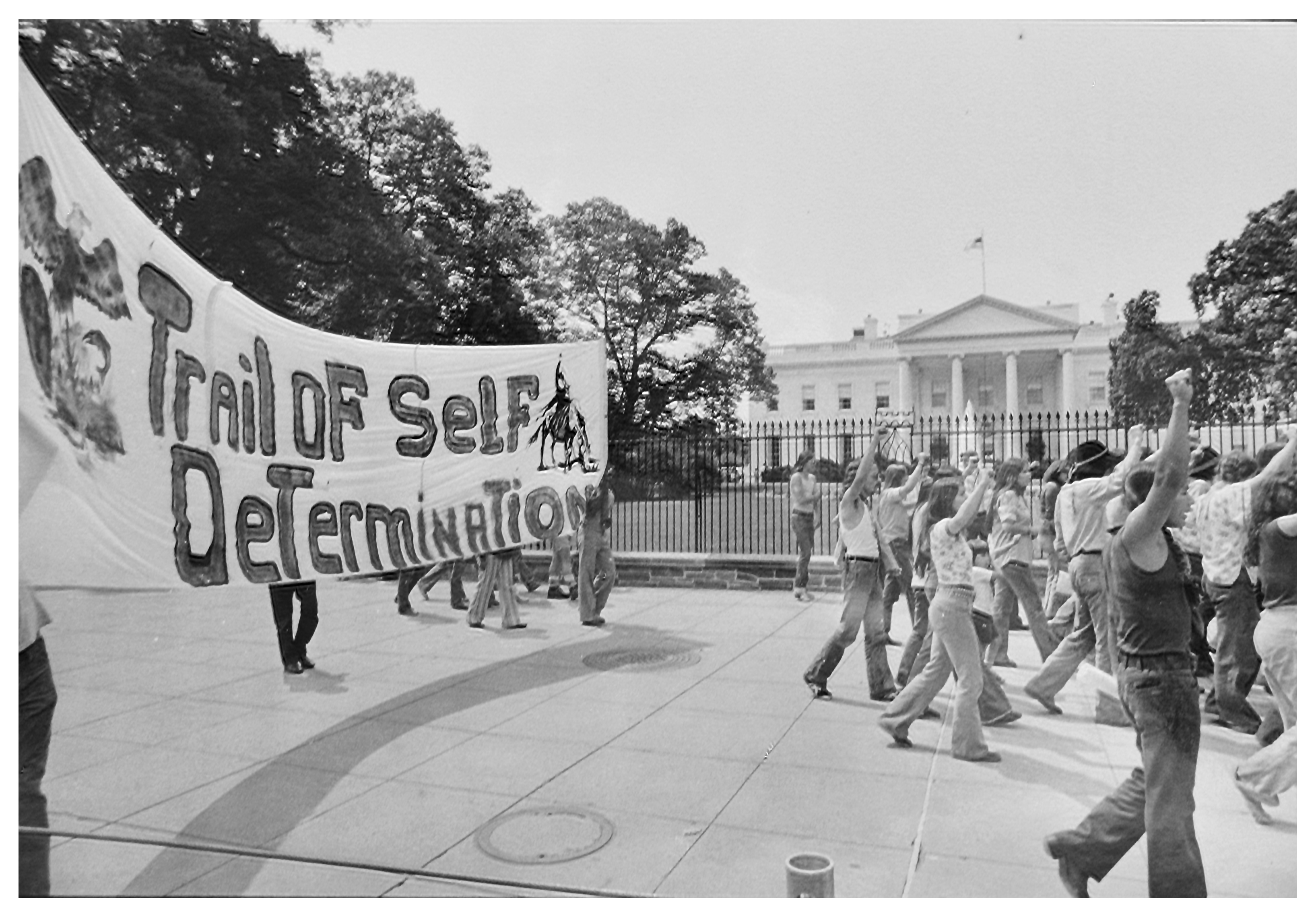
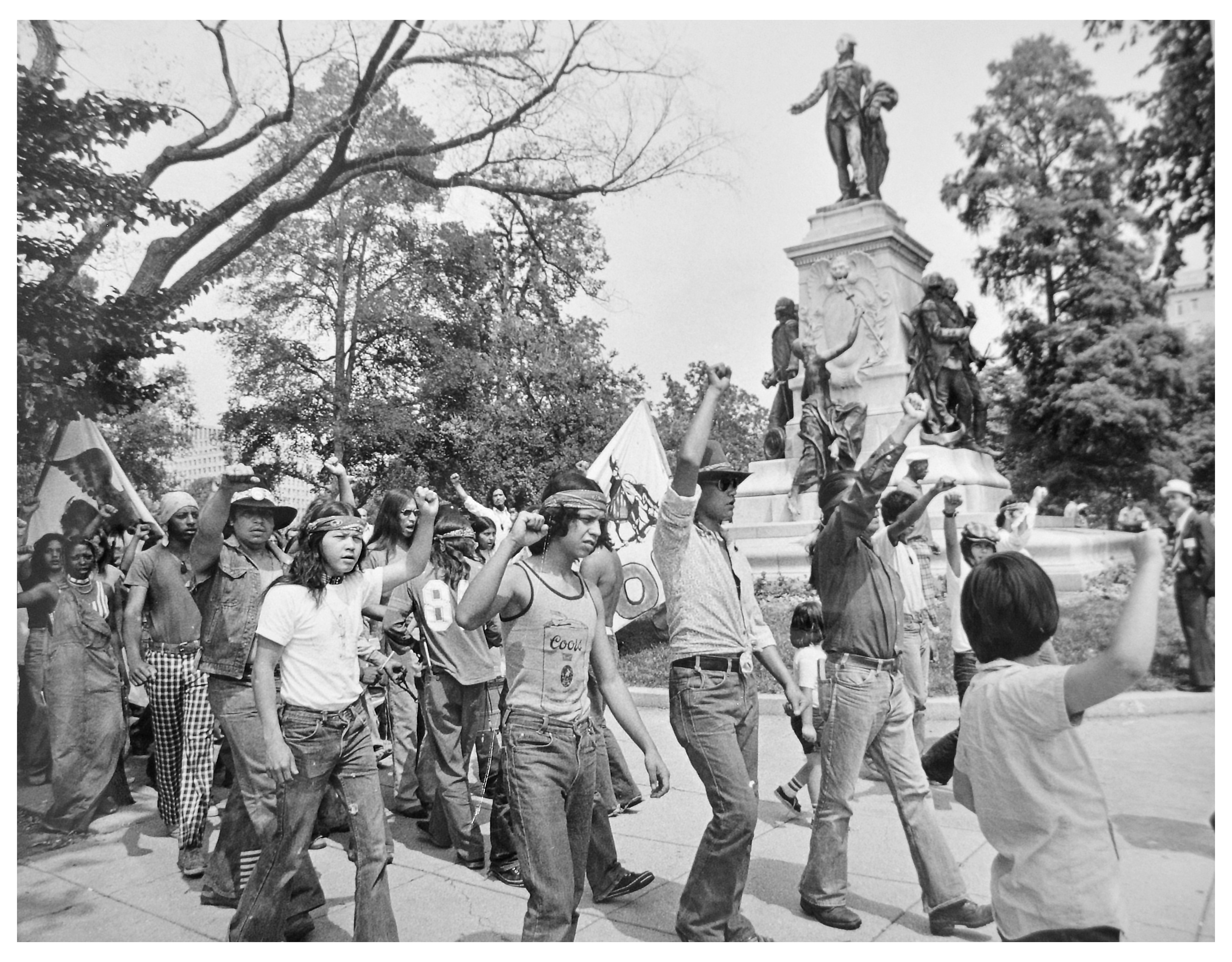
These photographs, taken in Washington D.C. in 1976, represent a group of those who chose to engage in demonstrations and protests as part of their response to the Bicentennial. The Trail of Self Determination, organized by members of the American Indian Movement (AIM) began as a caravan that intentionally followed the same route as the Bicentennial Wagon Train (see case on back wall). Departing from Yakima Nation (now the state of Washington), the caravan was joined by Sioux and Blackfoot nations, as well as Chicano movement allies (protesting continued violations of the Treaty of Guadalupe-Hidalgo in 1848). They traveled across the country, stopping to camp and host events, such as a week-long conference and workshops at Haskell Junior College, an early Residential School established by the Federal government. The Trail of Self Determination caravan arrived in the nation’s capitol on July 3, 1976, the eve of the Bicentennial. They established camp at the Piscataway Indian Center and soccer fields at American University. On July 4th, they made their way to the White House, 300 strong. As they marched and demonstrated, they demanded a meeting with President Gerald Ford and a joint session of Congress to establish a new system of Indian self-government and greater control over their natural resources. These requests were denied. They also went to visit the Bureau of Indian Affairs, site of the 1972 Trail of Broken Treaties occupations, and requested a tour of the site. The BIA, led by Secretary of the Interior Dennis Ickes, denied the group’s request for a tour, closed the building, and sent 200 employees home for the day. The caravan then assembled in the parking lot of the building. When the Federal Protective Service ordered them to clear the property, the group refused, and, as a result, 16 men, 16 women, and 22 youths were arrested. These arrests stemming from the caravan’s peaceful protest and request garned a lot of attention from the press; the group continued to demonstrate in Washington D.C. throughout the month of July.