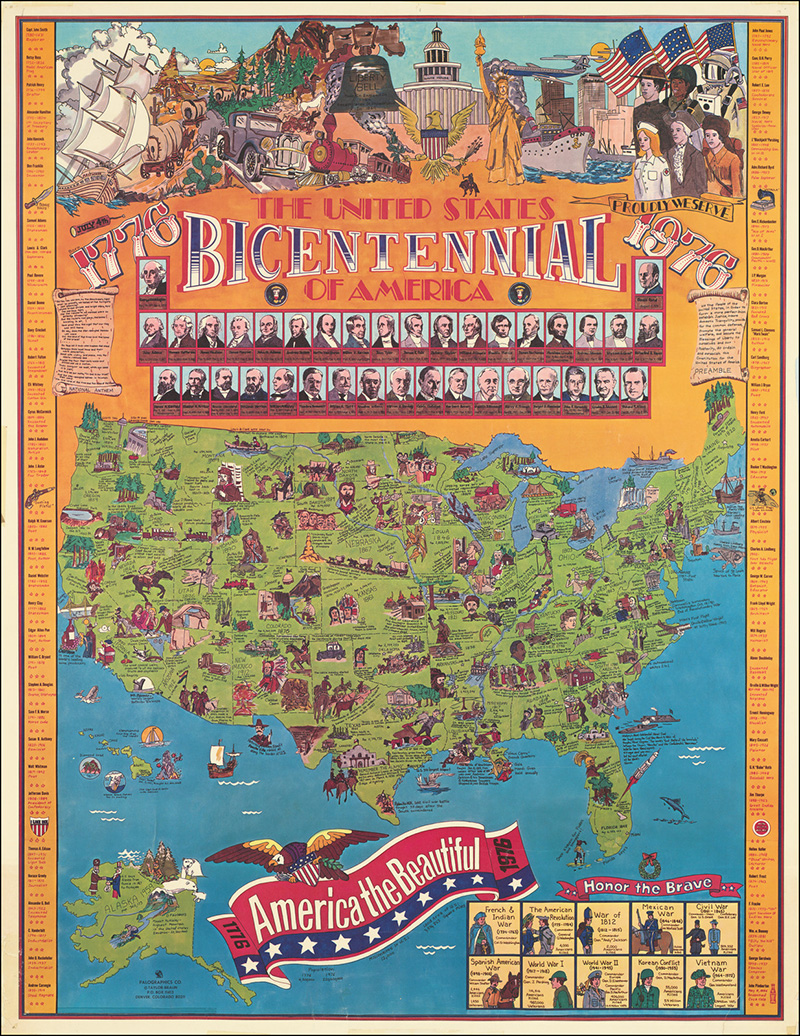
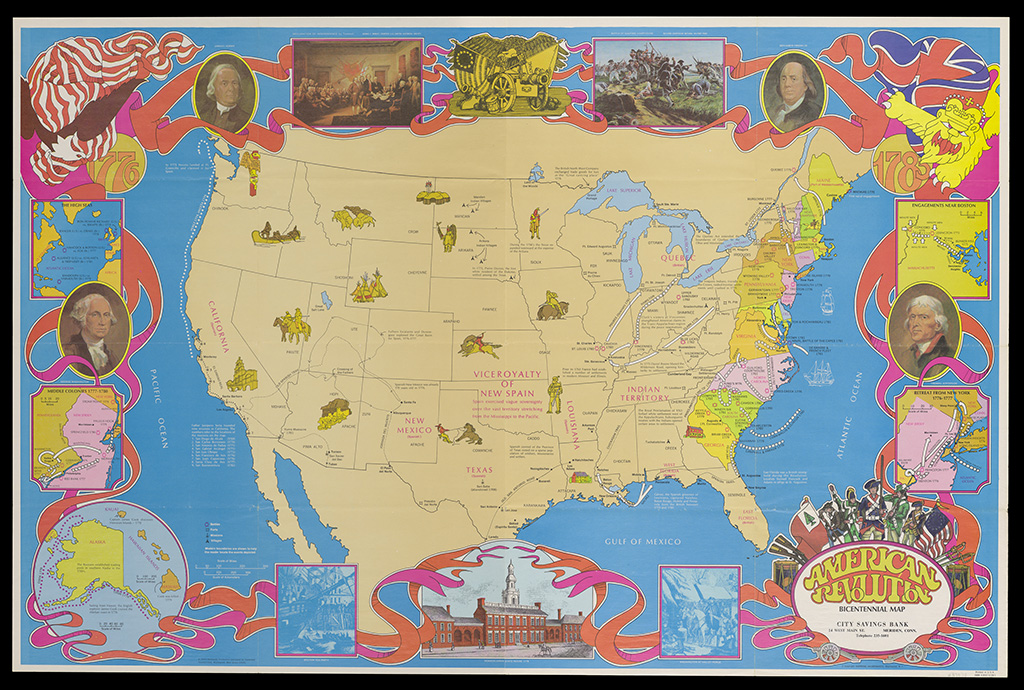
At first glance, there is little doubt that these large, graphic pictorial maps are products of the 1970s. The saturated colors and psychedelic design choices help situate the cultural milieu in which the maps were produced. The overall visual messaging of maps like “American Revolution Bicentennial Map” and “The United States Bicentennial of America 1776 - 1976” embodies the popular patriotic graphic style of the Bicentennial era.
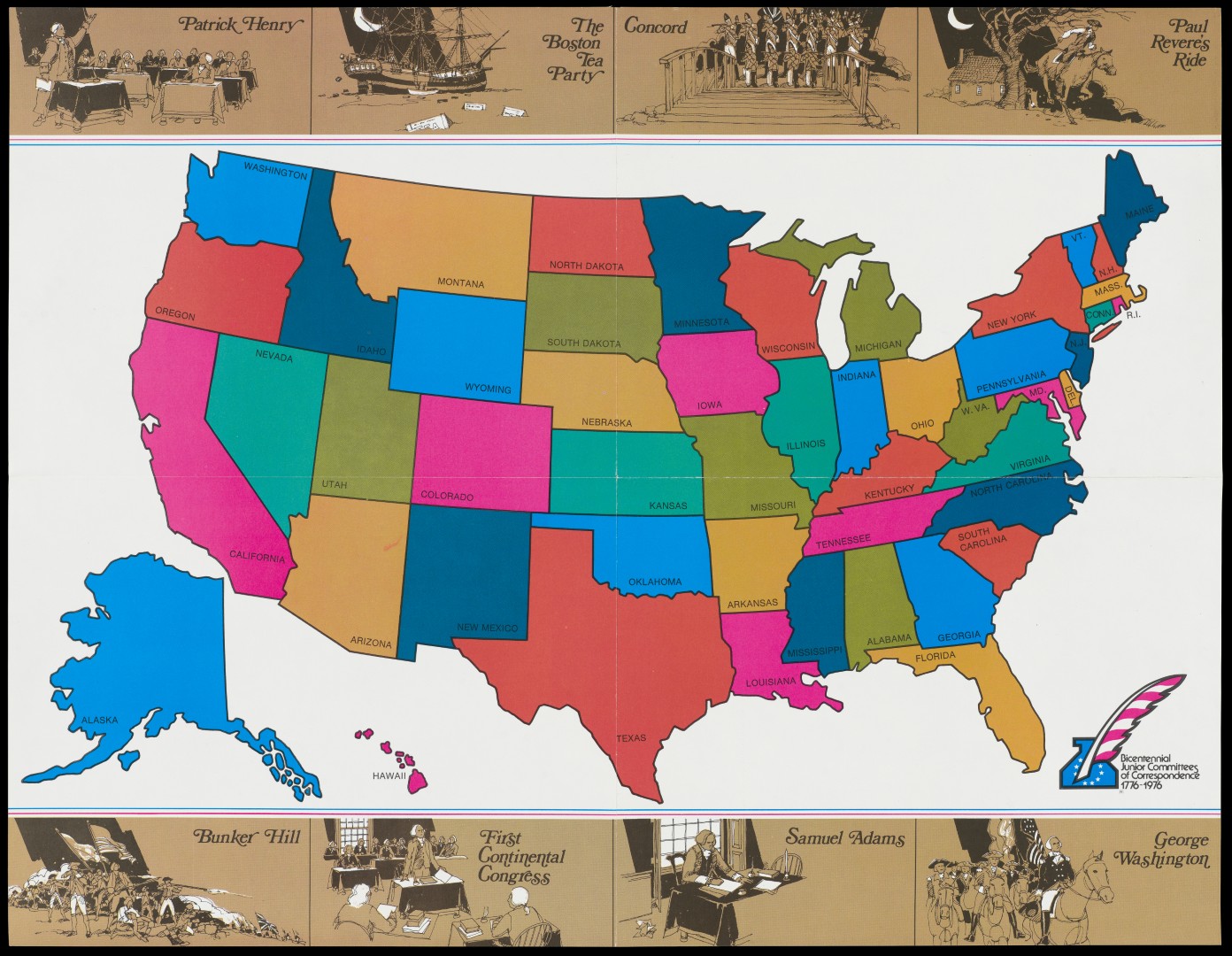
Committees of Correspondence were established in the 13 colonies prior to the American Revolution to serve as provisional governments in response to British policies and to facilitate communication between and among the colonies in order to coordinate resistance. During the Bicentennial, the United States Postal Service, the American Revolution Bicentennial Administration, and the National Association of Elementary School Principals established the “Junior Committees of Correspondence” to encourage upper elementary students to take part in Bicentennial activities and write to one another about them. 12 million students were scheduled to take part in the program during the 1976-1977 school year.
While the map itself leaves something to be desired in its overall design and graphic interest, its existence points to the ways in which the pedagogy of the Bicentennial extended beyond classroom walls. Organizers wanted to support the embodiment of American values, here exemplified by connecting students across the country–and across the map–in discussing the nation’s founding ideas with one another.
The portraits featured on these pages are from the official program of “USA ’76: The First Two Hundred Years,” a traveling multi-media museum exhibition meant to serve as an overview of America’s Bicentennial celebration. The commemorative program on display here indicates that the exhibit traced the history of the country and, like other pieces in this section, stresses the idea of a “beautiful, awesome empty and unnervingly quiet landscape” that was later settled by waves of immigrants.
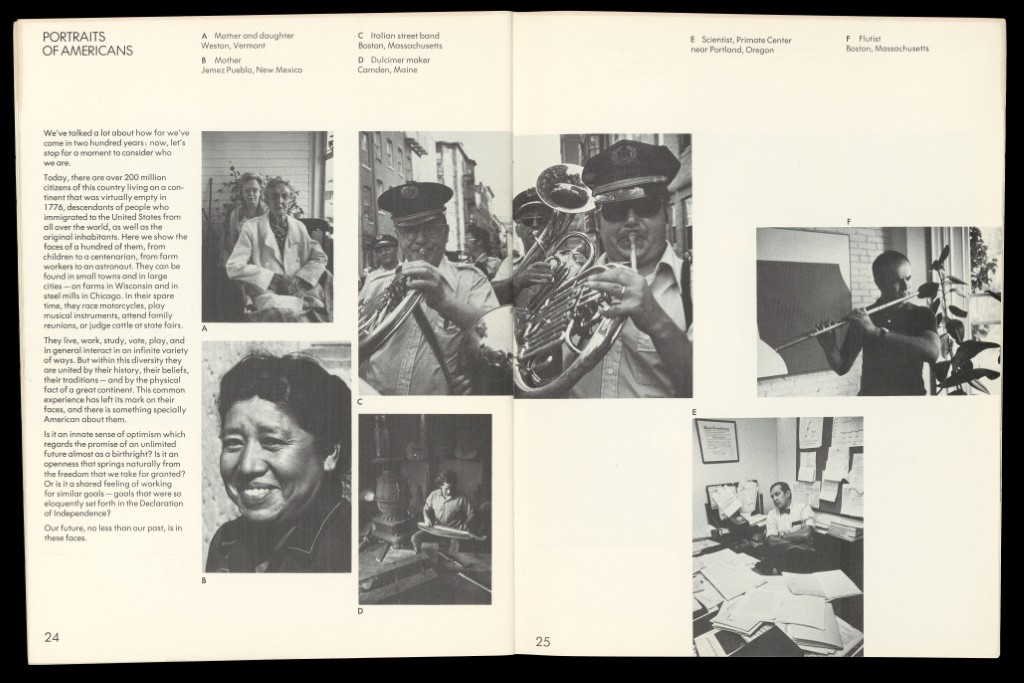
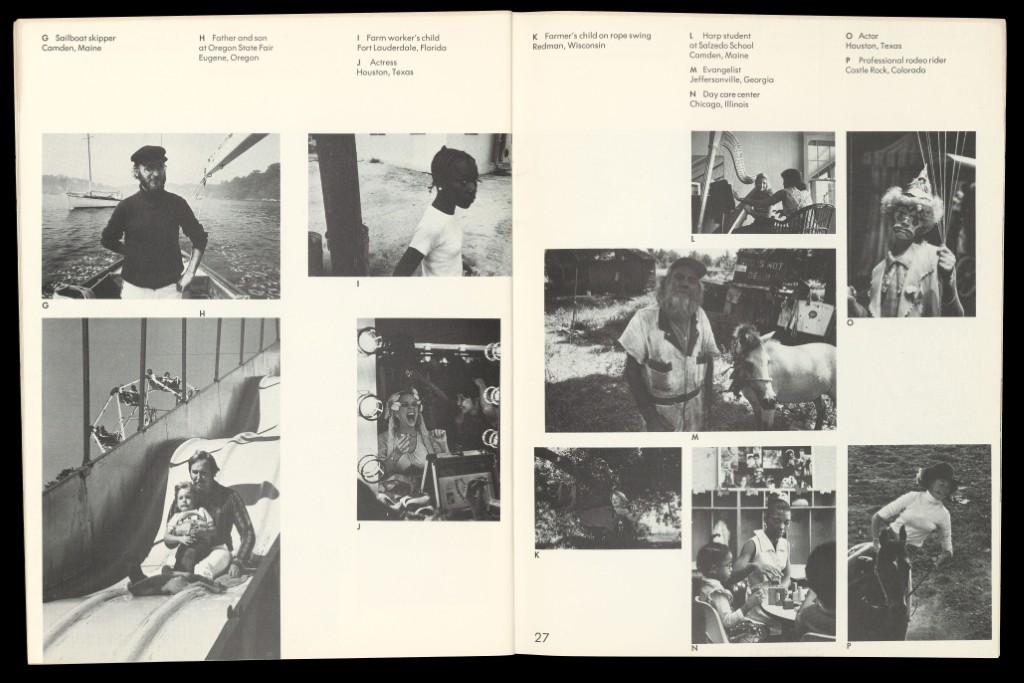
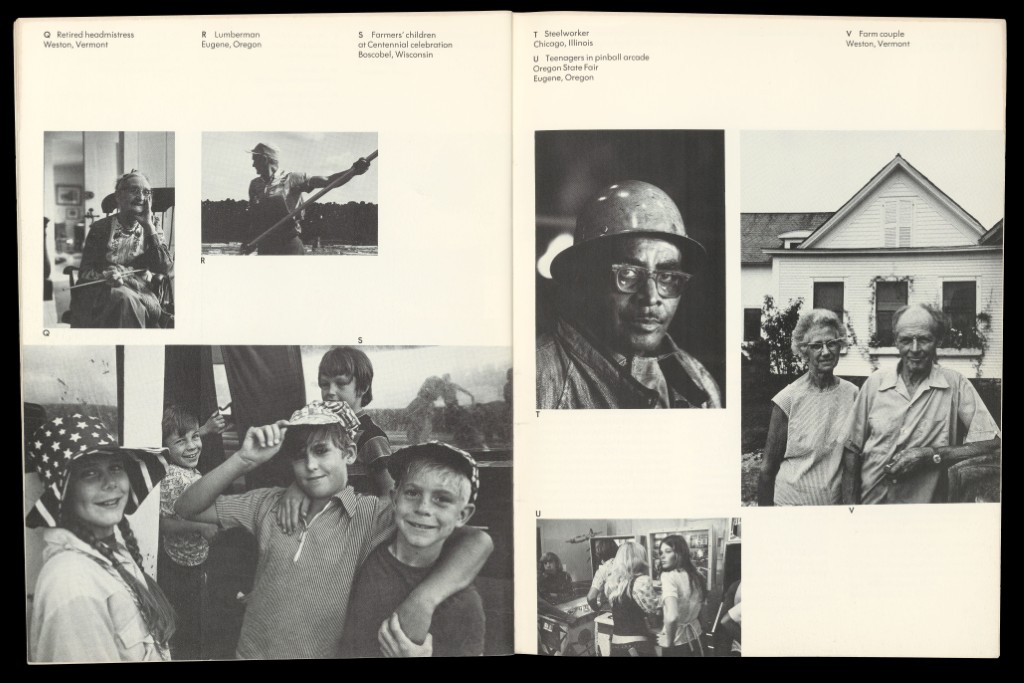
Indigenous peoples are accounted for in the exhibit, but simplistically so, either as a threat to white settlers, or as helpers who provided a foundation for survival, which was later surpassed by settler ingenuity and innovation. Much of the program focuses on the contemporary contributions of the United States as outgrowths of its origins, highlighting the built environment of city planning, transportation technology, industry, and scientific advancement. Several pages, like the ones displayed here, are also dedicated to portraits of Americans, visually emphasizing the diversity inherent in the United States while still hewing to a single story of what America means. The program ends with a section called “You and the Bicentennial,” which encourages Americans to “delve into the past that may lie hidden in our own attics and appreciate this historical and architectural heritage of the places we live in” in order to, as the curators encouraged, “deal with the present – and the future” by understanding the past.