In 1876, Americans marked one hundred years of independence in the shadow of the Civil War (1861-1865) and the divisive years of Reconstruction (1865-1876). Thus the centennial became not only a celebration of Revolutionary heritage, but also an opportunity to heal national divisions after years of bloodshed. The Philadelphia Centennial Exposition, America’s first World’s Fair, which ran from May 10 to November 10, 1876, drew millions of visitors eager to see patriotic commemorations of the Revolution, and marvel at subsequent American innovations in technology, agriculture, and art.
Publishers, printers, businesses, and civic leaders also used the centennial to link the narrative of the Revolution’s struggle for liberty to the nation’s pursuit of postwar progress. Through guidebooks, souvenirs, and speeches, Americans called on familiar Revolutionary images to invoke national pride and call for unity, a strategy that was continually put into play during the major wars of the 20th century, as well as the 1976 bicentennial celebration.
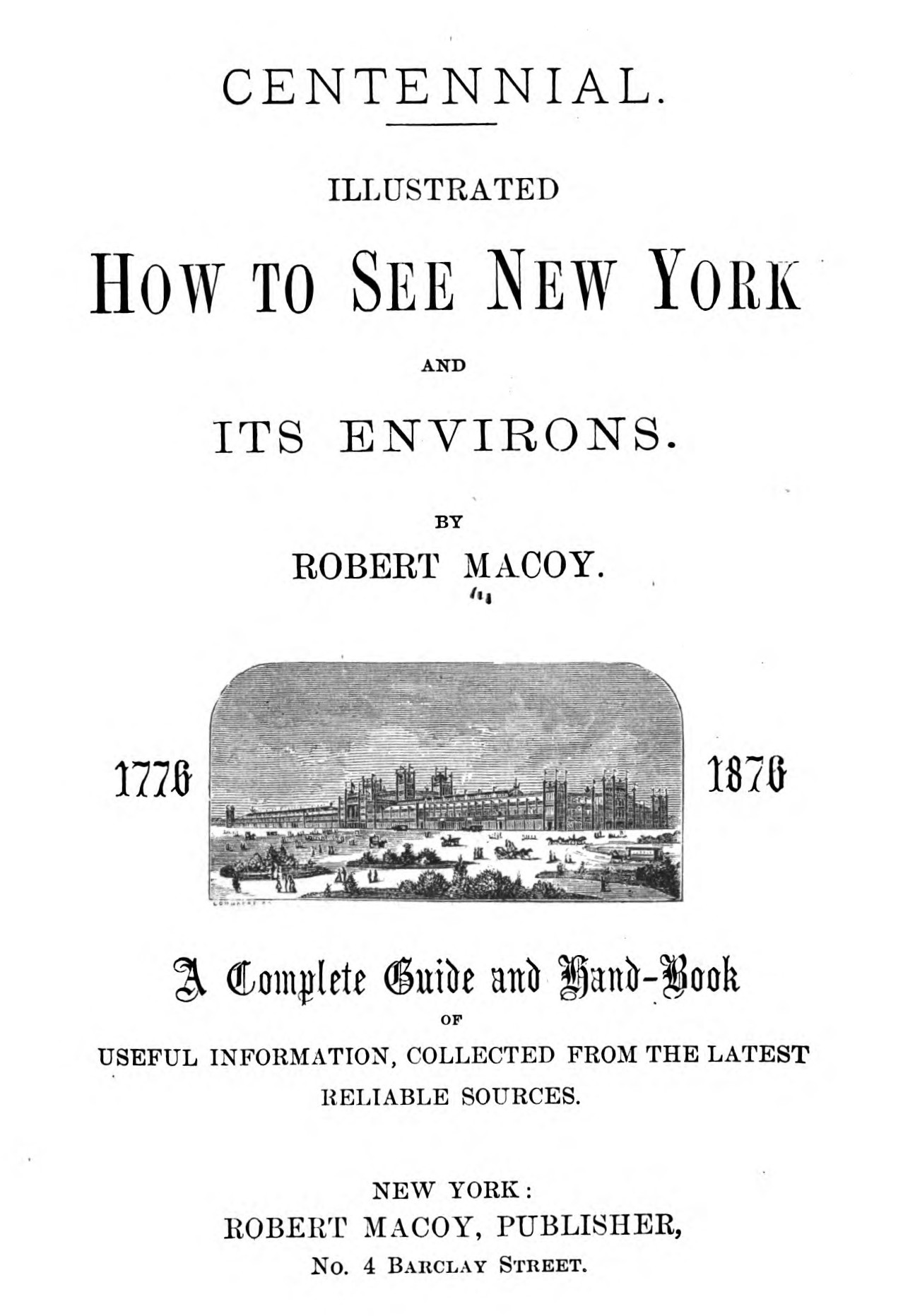
Published to mark the centennial of the American Revolution in 1876, this New York City guidebook traces the city’s story from Dutch colonization in 1609 through the present day. While commemorating the Revolution, it also offers a sweeping history of New York, emphasizing neighborhoods and landmarks tied to the struggle for independence. City Hall Park, for example, is highlighted as the site of the city’s first Liberty Pole and the spot where George Washington ordered the Declaration of Independence read aloud to his soldiers.
Blending history with practical travel advice, the guidebook catered to visitors eager to explore Revolutionary sites in the city. The author included information on railroads, telegraphs, and steamboats serving the city, making it both a patriotic narrative and a handy tourist resource. More than a simple commemoration, the book reflects how New York boosters used the centennial moment to elevate the city’s Revolutionary role and attract visitors. By weaving together stories of liberty with directions for modern travel, the guidebook positioned New York as both a birthplace of independence and a tourist destination. We see this same tactic a century later, with the roadmaps and guide books published for the bicentennial on display throughout this exhibition.
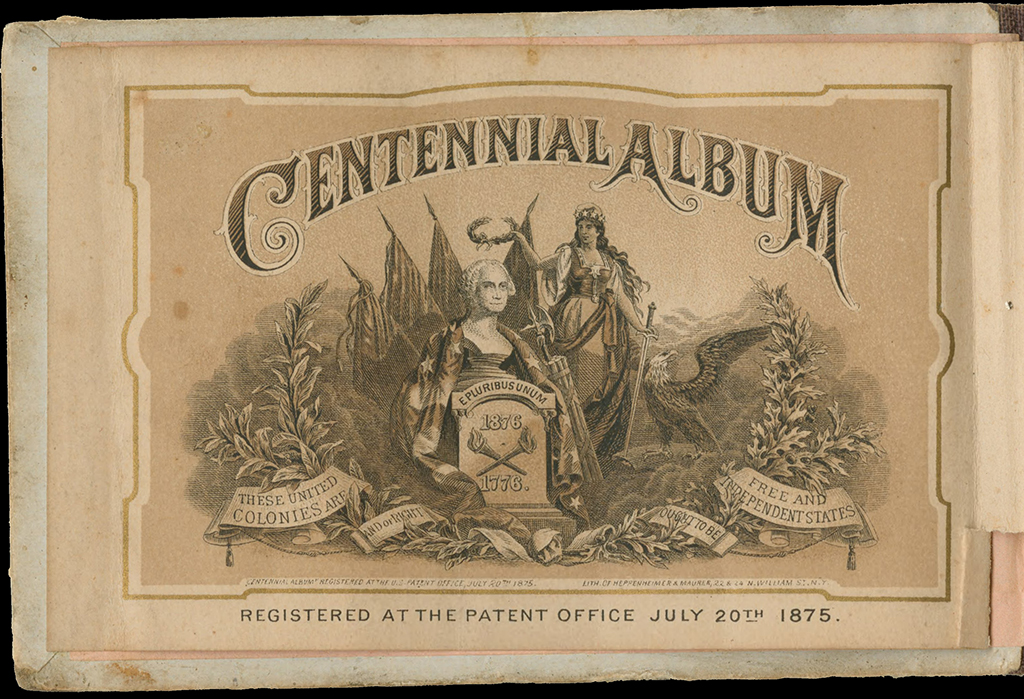
This souvenir viewbook captures the patriotic spirit and
spectacle of the 1876 Centennial Exposition in Philadelphia.
The album contains fourteen prints that showcase Revolutionary
landmarks alongside the new buildings constructed for the
fair.
The opening pages of the viewbook recount the nation’s
founding, beginning with the signing of the Declaration of
Independence, followed by images that evoke the nation’s
Revolutionary heritage, including the Liberty Bell,
Carpenter’s Hall, Independence Hall, Faneuil Hall, and the Old
State House in Boston.
Displayed alongside these historic sites are scenes from the Centennial Exposition, including the Main Building, Agricultural Hall, Machinery Hall, Horticultural Hall, and the Art Gallery. These remarkable structures, built for the first world’s fair hosted by the United States, symbolized American progress in industry, agriculture, and the arts. Through viewing these images in succession, viewers could trace the purported progress of the United States over the course of one hundred years.
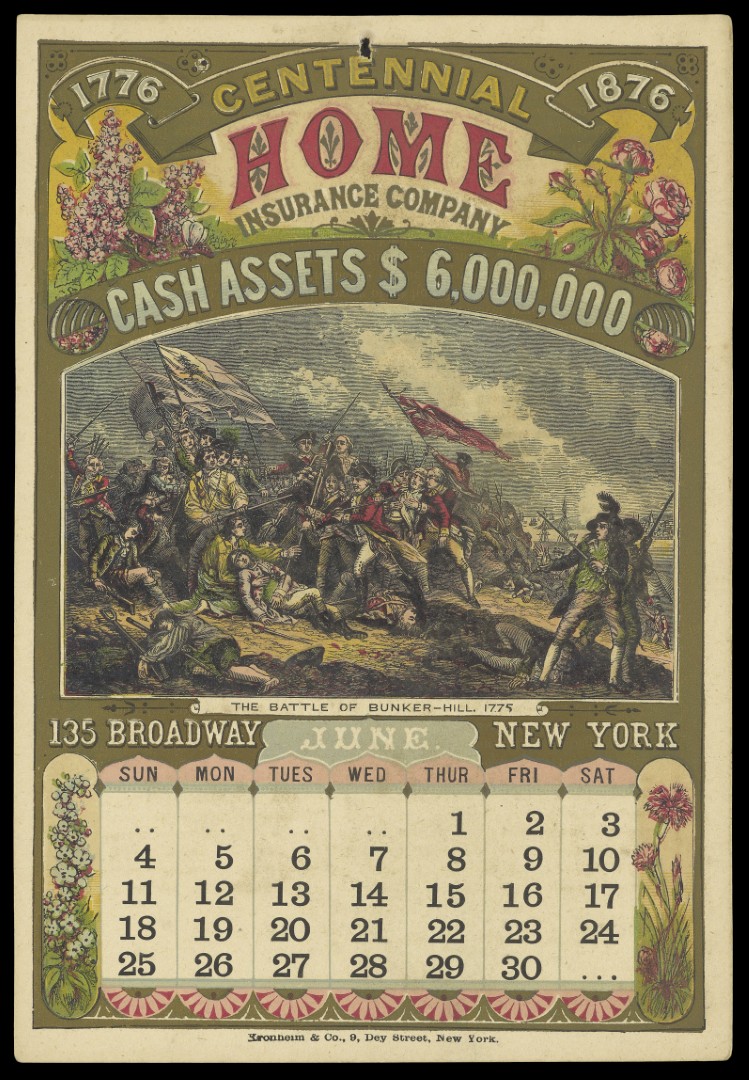
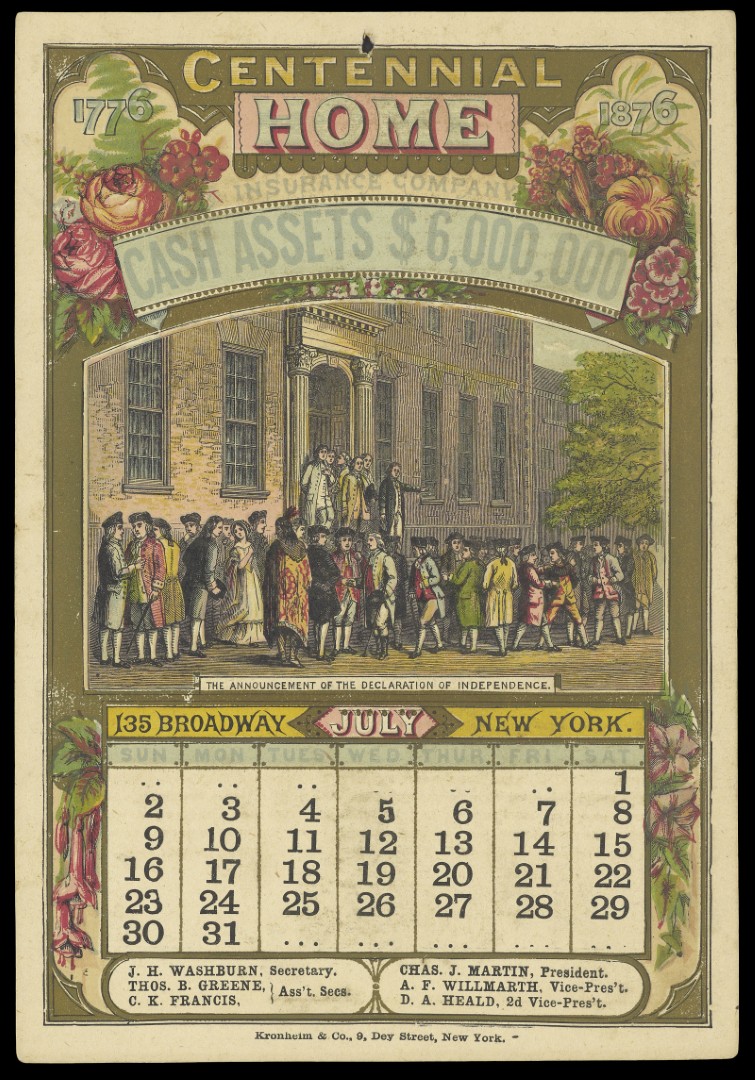
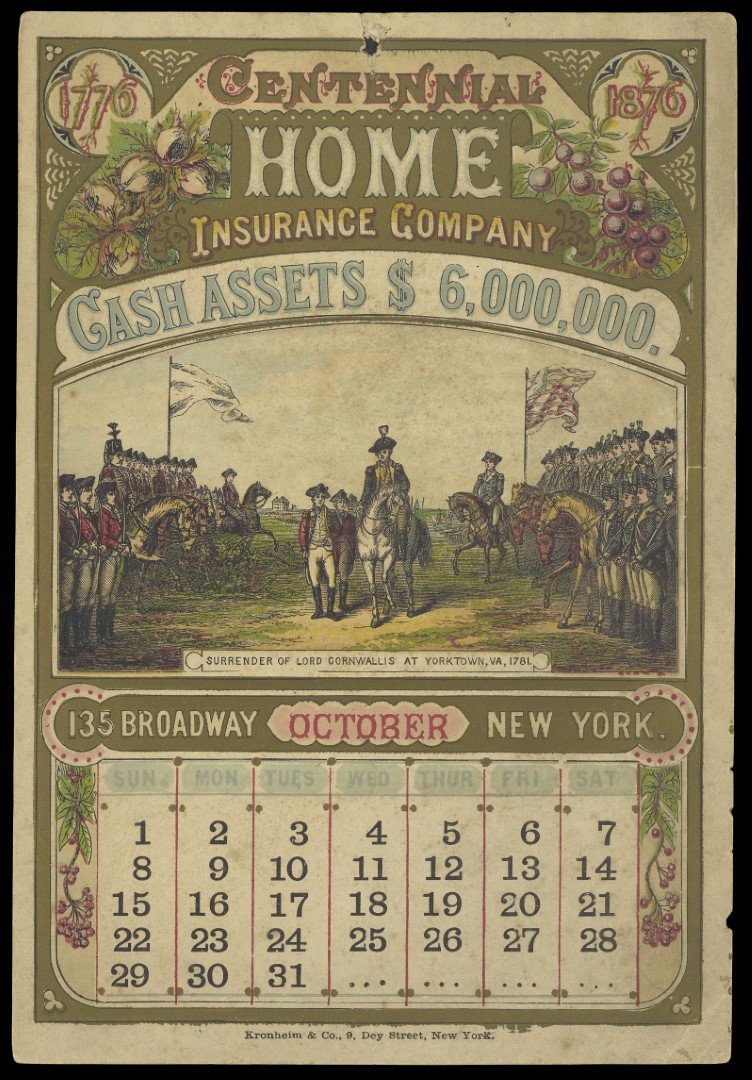
This chromolithographic advertising calendar was created as a promotional souvenir for the Centennial Exposition in Philadelphia. Similar to the Centennial Album (see the calendar pages above), it combines Revolutionary memory with the spectacle of the nation’s first world’s fair, portraying the Revolution as both a source of patriotic pride and a foundation for American achievements in the nineteenth century. The illustrations for each month of the year focus on key turning points in the war, including the Battle of Lexington and Concord, the Battle of Bunker Hill, and George Washington at Valley Forge. Other months include important sites of the Revolution, such as New York’s West Point and Boston’s Faneuil Hall. On the verso of each month’s page, lengthy text provides history lessons on each event and its significance to the Revolution. Two of the calendar pages include illustrations of the buildings erected for the Centennial Exposition, directly linking the nation’s struggle for independence with its industrial and cultural achievements a century later.